Showing posts with label California. Show all posts

Friday, May 1, 2015

No, it was Wal-Mart's OPENING that "Crippled" Pico Rivera, California


The business world was aflutter with the recent announcement by Wal-Mart that it was closing five stores around the country due to "plumbing problems," but more likely because of union activism among the employees of those stores. One article about the closures was even entitled, Wal-Mart's sudden closure has crippled a California city:
Wal-Mart's sudden closure of a store in Pico Rivera, California, has devastated the city.

The store was the city's second-biggest employer, and its closure resulted in the laying off of more than 500 workers, The Los Angeles Times reports.

The store also generated about 10% of Pico Rivera's sales tax revenue, or about $1.3 million annually, according to the report.


Now hundreds of laid-off employees are trying to find work while city officials scramble to plug the gap in revenue.

"It's a severe blow to our community, certainly, with the local economy, the homes and families, in terms of those people that were counting on those paychecks," Mayor Gregory Salcido of Pico Rivera told the Times.
With all due respect to the hardships being experienced by the Wal-Mart employees and by the citizens of Pico Rivera, it was not the closing of the Wal-Mart store that caused this crisis but the fact that the store was allowed to be opened in that community in the first place. I've never been to Pico Rivera, but if it at all resembles my hometown of Freeport, Illinois, I'm almost willing to bet that 30 years ago it probably had a diverse and vibrant number of small retail stores--perhaps even a functioning downtown business district. Again if it was all like Freeport, that vibrant downtown or wherever the small retailers were located was likely devastated once Wal-Mart came to town, undercut their prices and forced them out of business. By allowing the big bully corporate behemoth into their community, the city fathers (and mothers) were very much complicit in setting up a situation where the town could be devastated when that behemoth chose to petulantly punish its workers for the hideous trangression of asserting that they might actually deserve a slightly larger percentage of the profits the company makes from raping the planet and destroying economic livelihoods everywhere it goes.

If the citizens of Pico Rivera were at all smart, they would raise a big collective middle finger at Wal-Mart, tell the company not to let the door hit them on the ass on the way out and begin to reopen those small businesses that the retailer replaced in the first place. But if the last three decades have proven anything, it's that Americans LIKE it when corporate America pisses on their heads and tells them it's raining. So I have no doubt that when Wal-Mart gets over its snit fit, many idiot citizens of Pico Rivera will bow, scrape and grovel, welcoming their economic exploiter back with open arms.


Bonus: "Better to live on your feet than die on your knees"

Monday, November 17, 2014

What do Jerry Brown and Samuel L. Jackson Have in Common?


"You either die a hero or you live long enough to see yourself become the villain."

So says Aaron Eckhart as fictional District Attorney Harvey Dent in the movie The Dark Knight, not long before his kidnapping and horrible disfigurement by Heath Ledger's Joker turns him in exactly the way he predicted. In real life such transformations are far more subtle and usually take far longer to reach fruition. Two such contemporary figures who both happen to hail from the great and wacky state of California but who could not have more disparate backgrounds, beloved actor Samuel L. Jackson and current California Governor Jerry Brown, are living proof that for reputation's sake it is rarely a good idea to hang around too long in the public eye.

Let's start with Jackson, who American moviegoers love for his admittedly intense performances in such movies as Pulp Fiction and the remake of Shaft (can you dig it?). Few popcorn munchers are aware, however, that during his student days Jackson became so outraged by Martin Luther King's assassination that he joined the Black Power movement and in 1969 participated in holding members of the Morehouse College board of trustees hostage on the campus, demanding reform in the school's curriculum and governance. You can readily imagine Jackson going into that battle carrying a wallet with "Bad Motherfucker" etched in the leather. He was later convicted of a second degree felony for his actions, and clearly this was a young man willing to go to jail or even risk his life in order to fight systemic abuse and injustice directed toward black Americans.

Flash forward 45 years later, and the bad motherfucker has mellowed out a bit. In fact he's mellowed out so much that he has become unavoidable on commercial teevee as a pitchman for Capital One, hawking credit cards to already seriously over-indebted American citizens consumers idiots. Not only was Capital One bailed out by the taxpayers during the financial crash to the tune of over $3.5 billion, but the company's current credit card interest rate charged for purchases is 24.9% on money that the bank can, of course, borrow from the Federal Reserve for next to nothing.

It should go without saying that credit card debt most heavily burdens lower income Americans, who are disproportionally black and minority. But more surprisingly is that even middle class black families have come to lean heavily on high interest credit card debt, to the point where nearly four out of five such families are so indebted. Yet there is nary a negative word publicly uttered about Jackson's massive sellout of his previous principles despite the fact that his net worth is currently estimated at $170 million, and he hardly has any financially motivated reason to be out hawking debt to those, especially those of his own race who he once seemed to care about so passionately, who can ill afford it.

Next we have the example of Jerry Brown, who for much of his career campaigned vigorously against the corrupting influence of big money in politics. So how is all that going these days? Here's the Sacramento Bee with the scoop:
Brown began his political career in the 1970s as a radical governor who would take down political corruption and outsized donations from lobbyists. The Brown we see today courts millions in campaign contributions from big corporations and looks the other way when a key government official is caught red-handed trying to protect the company he is supposed to be investigating.

In the case of disgraced PUC President Michael Peevey, Brown has not demanded Peevey immediately resign from office, despite the recent unearthing of his blatantly improper and unethical intervention on behalf of PG&E. The PUC is supposed to hold PG&E accountable and protect the public in the aftermath of the 2010 San Bruno pipeline explosion. What we find instead are backroom deals, bribery, questionable rate hikes, and hand-picking judges who will be favorable to PG&E and the utility industry Peevey comes from.

---

Brown’s governance has failed to set a standard condemning influence peddling in Sacramento.

The changes in Brown’s campaign fundraising over the years are a signpost of the kind of leader he has become. Unlike his first gubernatorial campaign in 1974, during which he attempted to ban direct contributions from lobbyists, or his campaign for president in 1992, when he wanted candidates to cap donations at $100, Brown’s most recent campaigns have been marked by raising some of the largest sums in the country. The $25 million in the 2014 race came overwhelmingly from big corporations, labor unions, oil companies and wealthy individuals known for lobbying state government.

The means by which Brown secures such hefty contributions came under suspicion in January, when he asked the California Supreme Court to reverse lower court rulings blocking high-speed rail. Brown filed the appeal just three days after Tutor Perini Corp. – the contractor that won a $1 billion contract for the project despite having the lowest technical rating of those bidding – donated the maximum $27,200 it could to Brown’s campaign.

Is it any surprise that in September Brown vetoed an ethics bill (Senate Bill 1443) that would have required more campaign finance disclosure and reduced the value of gifts lobbyists can give state officials?
No it really isn't a surprise given that it has been quite awhile since anyone, even a politician of Jerry Brown's stature, could be elected to a major post like Gubbner of California WITHOUT pocketing vast sums of cash from such sources. At some point "Governor Moonbeam," who during his first stint as governor during the mid-1970s lived in a modest apartment instead of the governor's mansion and drove around in a Plymouth Satellite sedan instead of being chauffeured by limousine, recognized that he either needed to compromise his principles or give up politics, and we can see which route he chose.

I highlighted these two examples to demonstrate just how commonplace and mundane the selling out and/or corruption of American public figures has become these days. In fact, it has become so much so that those involved in it can no longer see that they are just as big a part of the problem as those they may choose to vilify, as shown by this amazingly clueless quote from Jackson about Supreme Court Justice Clarance Thomas:
He (Jackson) compared his Django Unchained character, a villainous house slave, to black conservative Justice Clarence Thomas, saying that "I have the same moral compass as Clarence Thomas does".
No, Samuel, sadly it is not just your "Uncle Tom" character who has the "moral compass" of Clarance Thomas, but YOU as well. You and Thomas are part of the same massive hypocrisy, and are both useful "tools of the man" as you and your brethren no doubt put it back in the 1960s. And along with your esteemed governor, Jerry Brown, you are hardly alone.


Bonus: "The path of the righteous man is beset on all side by the inequities of the selfish and the tyrannies of evil men"

Tuesday, June 5, 2012

Why Are Pension Plans On The Ropes? It's The Math, Stupid


An article appeared on Saturday about yet another municipal government out in California struggling with exploding pension costs. In both the public and private sectors, pensions have become a gigantic financial anchor, dragging down balance sheets. How did all of this come about? Many libertarian types will say that its because workers have "unrealistic" expectations about what is "owed" to them in retirement. That argument, however, is just typical callous Randian nonsense. The real reason why pension plans are in trouble is because of unrealistic expectations not on the part of retirees but by the supposed financial geniuses who run the pension plans.

It all really comes down to a lack of understanding of basic math, particularly exponents, and the simple fact that exponential growth in a finite world is simply not possible. Let me show you what I mean. Here is a brief excerpt from the Yahoo News article about the woes of the California pension system:
Meanwhile, the giant California Public Employees' Retirement System (CalPERS), the largest public pension fund in the country, has been engaged in a tortured debate about whether its rate-of-return assumptions are too optimistic.

The CalPERS plan covers state workers and dozens of cities that voluntarily joined its system.

It recently cut its annual return assumption to 7.5 percent from 7.75 percent, which would raise the shortfall it previously had estimated at $85 billion to $90 billion. CalPERS says it has easily met its return target for 20 years, but Stanford's Joe Nation and other economists say a lower rate would better reflect the uncertain outlook for markets and a century-long record of market returns. On Friday the Dow Jones industrial average fell to its lowest level in 2012 - dropping into negative territory.


That explains why Nation calculates the collective shortfall at CalPERS, the smaller California State Teachers Retirement System and a state university plan at half a trillion dollars - he assumes lower returns than do systems run by the state and cities like San Jose.

It's some consolation for California, perhaps, that the bill mounts slowly - and other states are in even worse shape.

"The pension situation in California is by no means the worst," said Douglas Offerman, an analyst at Fitch Ratings. "We rate California lower than we rate any other state. We do not rate it at that level because of its employee obligations."
It should be plainly obvious from this story that the pension plans are in trouble because they are anticipating a completely unrealistic rate of return on their investments. Yes, I'm sure they "easily met the return targets for 20 years" given that the DOW more than tripled between 1992 and 1999. The bull market run of the 1990s was certainly amazing, but it was also a total historical anomaly.

However, let's say you started a brand new pension plan on March 29, 1999, and indexed your plan to perfectly track the DOW. You might have felt giddy that day, as the DJIA was in the process of capping off an incredible six year run that saw it close above 10,000 for the first time ever. And let's say for your pension plan you decide to assume an annual rate of return of 7.5%, just as CalPERS is doing now.

Flash forward 13 years. How's your plan doing? Well, in order to make your targeted 7.5% rate of return, the DOW would have to be sitting at around 25,700 as I sit here and write this post. Given that as of the end of last week it actually closed at 12,118, your pension plan is now more than 50% underfunded, not because the retirees are being greedy but because you, the money manager in whom so many people misguidedly and naively placed their trust, are an incompetent idiot.

Maddeningly, this obvious incompetence continues, despite the fact that right now the DOW is sitting around 2,000 points, or about 15%, lower than when it hit its all time peak in 2007. That's a five year negative return rate even with all of the money pumping by the Federal Reserve and the massive deficit spending by the federal government in the meantime. It's hysterical that CalPERS is now engaged in a "tortuous debate" about whether its rate of returns assumptions are too optimistic when it should be obvious that they would be so even if they were to be slashed by HALF. To believe that the 7.5% assumption is accurate is to believe that the stock market will double in value in the next decade. Given that there are no drivers for good jobs in this economy and that without good jobs consumer spending cannot continue to increase, does that sound like a good bet?

Right here we also see one of the big reasons why Benny and the InkJets have been so desperate to prop up the stock market. Yes, as many commentators have pointed out, "grandma and grampa" living on fixed incomes are being badly hurt by the nearly non-existent interest on their savings account, but they would be be hurt even more if their pension plan goes bankrupt. The next major market crash, whether it comes next month, next year or in five years, will be an absolute catastrophe for pension plans both public and private all across the nation. Given that the Federal Reserve and the federal government appear to be running low on the ammunition needed to keep stocks propped up, that is a very ominous thought indeed.


Bonus: From my You Tube channel - "30 year low"

Tuesday, May 22, 2012

Hewlett-Packard Likely To Lay Off 25-30,000 Employees


The big announcement from Hewlett-Packard is not expected to come until tomorrow, but for the company's workers it is expected to be a bad one. Here is Market Watch with the details:
H-P will post fiscal second-quarter results following media reports that the company was going to eliminate 25,000 to 30,000 jobs, or up to 10% of its workforce. The Palo Alto, Calif.-based company will present both its results and restructuring plan after the closing bell, the source told MarketWatch.

For the quarter, analysts expect H-P to post a profit of 91 cents a share, on revenue of $29.9 billion, according to a consensus survey by FactSet Research. For the year-earlier period, the company reported a profit of $1.24 a share, on revenue of $31.6 billion.

The company has struggled with stiffer competition and internal squabbles, which have taken a toll on its market value. The company’s stock slid by 25% since its last earnings report in late February, when it reported that profits had plunged by 44% and gave a disappointing forecast for the current period. See full story on H-P's last quarterly report.

Many analysts see layoffs at the tech giant as inevitable. “These are never fun but given where H-P is, these are necessarily to get the company back on track,” Sterne Agee analyst Shaw Wu said.

Topeka Capital Markets analyst Brian White affirmed this view, saying in a note, “Downsizing at H-P is clearly needed.”

The reported plan, he said, could “benefit H-P’s annual earnings per share by about 75 cents.” He also noted that H-P’s efficiency as measured by revenue per employee was at “the lowest level in a decade.”
Personally, I'd rather see the downsizing of asshole analysts like Shaw Wu and Brian White. After all, unlike those two useless paper pushing parasites, Hewlett--Packard employees actually make something for a living.

I would also note that H-P's CEO is still the hideous Meg Whitman, who thought nothing of blowing a cool $144 million or so of her own cash in her hilariously inept California Gubernatorial bid against Jerry Brown. If H-P needs to cut costs, maybe it should fire her fucking ass first.


Bonus: "It's so easy to hurt others when you can't feel pain"

Sunday, May 13, 2012

Austerity Porn: Shortfall In California’s Budget Swells To $16 Billion


In the postwar era, California has been known and trend setter for the entire nation. As such, the rest of the country really needs to sit up and take notice of this story that appeared yesterday in the New York Times:
The state budget shortfall in California has increased dramatically in the last six months, forcing state officials to assemble a series of new spending cuts that are likely to mean further reductions to schools, health care and other social programs already battered by nearly five years of budget retrenchment, state officials announced on Saturday.

Gov. Jerry Brown, disclosing the development in a video posted on YouTube, said that California’s shortfall was now projected to be $16 billion, up from $9.2 billion in January. Mr. Brown said that he would propose a revised budget on Monday to deal with it.

“We are now facing a $16 billion hole, not the $9 billion we thought in January,” Mr. Brown said. “This means we will have to go much further and make cuts far greater than I asked for at the beginning of the year.”

Mr. Brown disclosed the news in a video that had all the trappings of a campaign announcement. In it, he aggressively accounted for the steps he said he had taken to try to scale back a $26 billion deficit he found upon taking office. And he urged viewers to back an initiative he is putting on the November ballot that would increase sales taxes by 0.25 percent and impose an income tax surcharge on wealthy Californians to try to stave off more cuts.

State officials said Mr. Brown’s proposal would include a package of immediate cuts, as well as others that would be triggered only if voters failed to approve his tax plan. The sales tax increase would expire after four years, while the income tax surcharge would last for seven years.

State officials said the shortfall was a result of disappointing revenue collections in April as California continued to struggle to pull out of the recession. “We are still recovering from the worst recession since the 1930s,” Mr. Brown said.

Still, the state controller reported that the state had exceeded spending by $2.1 billion as well, though Mr. Brown said court rulings and other actions that restricted California from making the cuts were at least partly to blame.

At the same time, the deficit projections — which have been increasing since Mr. Brown and the Democratic-controlled Legislature approved a budget last summer — suggest that the state may have been overly optimistic in estimating what kind of revenue it would take in. That has been a repeated problem in Sacramento as officials have struggled over the past five years with the state’s worst financial crisis since the Depression. Mr. Brown, in taking office last year, pledged to end what he said were the tricks lawmakers regularly used to paper over budget shortfalls.
And all of this at a time when the economy is supposedly "recovering." So why does the state continue to overestimate projected revenues, even after electing a governor who has pledged to get serious about not doing so? My guess would be that a big part of the reason is that those formerly unemployed workers who have been lucky enough to find jobs have done so at salaries well below what they used to earn, meaning that they aren't contributing nearly as much in taxes to the state coffers.


Bonus: From my You Tube channel...the California state budget is slightly less than even

Wednesday, April 25, 2012

International Paper Closing Four Plants, Eliminating 215 Jobs


A corporate merger was the reason for this mass layoff story. The Memphis Business Journal has the details:
Citing the need to eliminate overcapacity and integrate its now-combined container business, International Paper Co. is shutting down four plants across the country in the next two months.

The plants are located in Fort Smith, Ark., Santa Paula, Calif., Chicago and Solon, Ohio. The company will eliminate a total of 215 jobs, according to an International Paper statement. The plants are a combination of facilities owned by Austin, Texas-based Temple-Inland Inc. and International Paper.

The closings come months after Memphis-based International Paper (NYSE: IP) completed its $4.4 billion acquisition of Temple-Inland, which brought an additional 10,000 employees, 59 box plants, 14 building products plants and seven containerboard mills into IP’s group of 23,000 employees, 12 paper mills and more than 140 box plants on six continents.
Sounds to me like someone is trying to monopolize the paper industry.


Bonus: We don't need corporate America to do any more joining together

Monday, April 2, 2012

Aerospace Corp. In El Segundo (California) Lays Off 306 Workers


More defense war contractor cutbacks. Here is the Los Angeles Daily News with the details:
El Segundo-based Aerospace Corp. has laid off about 300 people, or 8 percent of its workforce, with most of the affected employees notified Thursday.

About two-thirds of the 306 workers who received pink slips are technical staff. The remainder are support staff such as secretaries, spokeswoman Sabrina Steele said.

Aerospace has about 4,000 employees, with 3,000 in California, mostly at the El Segundo headquarters. It is unclear how many affected workers were in El Segundo. The company has 17 locations nationwide.

In a statement, Mike Drennan, Aerospace senior vice president of operations and support group, said: "A workforce reduction is difficult for all involved, particularly those directly affected.

We did not make this decision lightly, but we are operating in a cost-constrained environment. As always, we remain focused on helping our customers succeed in their missions and providing them innovative solutions."
The Aerospace Corp. is a quasi-governmental company that advises the Air Force on critical rocket and satellite programs.
And so it goes.


Bonus: Sorry, Mr. Hammond, but I beg to differ

Friday, March 30, 2012

Exar Corporation (California) Will Lay Off 120


I found this mass layoff story to be particularly galling. Here is Bay Area Biz Talk with the details:
Exar Corp. eliminated 120 positions Wednesday, bringing the money losing Fremont semiconductor company's total job cuts for the first quarter under new President and CEO Louis DiNardo to 169.

Exar said that the combined cuts amounted to 40 percent of worldwide headcount and would save $21.7 million in annual costs. About 270 employees remain worldwide at Exar, which does contract work for other companies and sells chips and software used in industrial, networking and data storage systems.
If I was still employed by Exar, I'd be polishing up my resume, that;s for sure. but here's the kicker:
DiNardo, who last was a partner at Crosslink Capital but previously was president and COO of Intersil Corp., was appointed CEO in December with a generous salary and stock package following years of significant losses at Exar, which at the time had accumulated a deficit of $236,797,000.

The company has lost another $4.73 million since then on revenue of $29.7 million, which was down from $36 million the previous quarter.
Holy crap! This company's debt amounts to almost a million dollars per remaining employee. And yet they went out and paid top dollar to a new CEO so he could lose even more money. Wish they'd paid me instead as I'm pretty sure I could have done that. Fucking brilliant.


Bonus: Sounds to me like this is what Exar is doing if it thinks it is going to be able to get out from under that mountain of debt:

Thursday, March 8, 2012

L.A. County Court System To Lay Off 350 Employees Due To Budget Cuts


Last October, I posted a story about overcrowded court systems suffering due to staffing cuts. Here comes the latest such tale of woe from the Los Angeles Times:
The Los Angeles County Superior Court system is expected to lay off about 350 employees in June and "restructure" more than 50 courtrooms because of deep cuts in funding by the state, according to a memo obtained Tuesday by The Times.

The latest reductions come after the court has already reduced staff by 500 -- or about 10% -- due to layoffs and attrition over the last two years.
More troubling was this quote:
"These changes will affect every judicial officer and staff member -- as well as the millions of attorneys and litigants who depend upon our courts to deliver justice," Presiding Judge Lee Smalley Edmon and Executive Officer John A. Clarke wrote in the four-page memo. "Nonetheless, there is no escaping the fact that this next round of cuts will be the most significant event to happen in our court .... Never before has a budget crisis dealt so crippling a blow to our court."
A lot of people in the peak oil and "reality based" communities often ask when exactly collapse is going to come to America. Take this as yet another sign that collapse is already here--it's just happening in slow motion.


Bonus: "Next time you come into my courtroom, you will look lawyerly"

Monday, February 13, 2012

California's January Tax Revenue was $528M Below Estimate


More and more data continues to come in which indicates that the media narrative about the economy being on the upswing, fueled in large measure by the January month jobs report from the Bureau of Labor Lying statistics and the booming of the horrendously manipulated stock market, is a flat out falsehood. Just in the past week there have been reports that American gasoline consumption is cratering along with the Baltic Dry Index (which measures global shipping rates), indicating a massive slowdown in the economy. And now comes word that taxes revenues in the nation's largest state also went into free fall in January. Here is Bloomberg with the details:
California collected $528 million less in taxes in January than Governor Jerry Brown estimated in his latest budget, Controller John Chiang said.

The majority of the shortfall was in income taxes, down $525 million, or 6.3 percent less than projected in the spending plan Brown released Jan. 5, Chiang said. Corporate taxes were down $127.9 million, while sales taxes were up $42.8 million.

California’s cash may be exhausted by March, Chiang reported Jan. 31. The nation’s most populous state will need $3.3 billion by mid-April without additional borrowing and payment delays, because it has spent more and received less than anticipated for the current fiscal year.

“January revenues were disappointing on almost every front,” Chiang said today in a statement. “Thankfully, the decisive actions taken recently by the state to stabilize its cash flow will ensure that California can pay its bills through the end of the fiscal year.”
Love that bit of FlackSpeak there at the end by Controller John Chiang. "Stabilizing cash flow" actually means "massive budget cuts," but obfuscation has now become official policy just about everywhere.

If the economy really is recovering as the pundits would have you believe, why did California's income tax collections plummet by over half-a-billion dollars in just one month? That sounds like either, a) people are losing their jobs in large numbers again, b) wages and salaries are declining rapidly, or c) all of the above. Combined with the gasoline usage data and the BDI numbers, it also sounds like the economy is on the brink of a major crash.

So what does California plan to DO about this depressing state of affairs? Oh, the usual same old tired bullshit:
Treasurer Bill Lockyer plans to obtain as much as $1 billion from Wall Street to ease the shortfall. Lawmakers passed a bill to let the state borrow $865 million from internal accounts to avert a cash shortage.
That's their strategy: borrow, borrow and borrow some more until you can't borrow so much as another nickel. And that, my friends, will be the end game, not just for California, but for America as a whole.


Bonus: Well, if nothing else this story gave me the excuse to play some Social Distortion

Sunday, February 12, 2012

Irwindale Speedway Closing Due to Declining Attendance


One unconventional place to keep an eye out for signs marking the continued deterioration of the economy is in the world of sports. Attending sports events represents the ultimate frivolous household expense that can be cut back or eliminated by families looking to economize. Here is the latest example of distress in the sports world, as reported by the Pasadena Star-News:
Irwindale Speedway, considered by many to host the finest short track racing in the nation, appears to be history.
On Saturday, workers appeared to be closing down the facility, which has had the biggest NASCAR short track races on the West Coast for more than a decade.

Workers were dismantling the pit grandstand, which is adjacent to the first turn. They also were taking apart storage areas. A large billboard bordering the San Gabriel Valley River Freeway was not lit up for the first time in its history, barring power outages, and the track's web site was taken off the Internet.

"They went out of business," said a prominent Irwindale racer who did not want to be identified.

Vice president and general manager Bob DeFazio and some staff members were in the locked administration building Saturday morning, with a moving truck backed up to the office's side entrance and a moving box stacked outside. DeFazio, through track operations director Bob Klein, refused to comment. Klein only would say an announcement would be made Monday.
The article goes on to describe what did the racetrack in:
Opened in 1999 amid much fanfare, it featured a state-of-the-art track surface which cost several million dollars. Track CEO Williams, a former owner of Golden States Foods which supplies food to McDonald's and a friend and car builder for Roger Penske-driven IndyCars, said at the time he wanted to rival the draw of the Dodgers.

NASCAR Hall of Famer Darrell Waltrip, in a visit to the track, called the facility the finest short track in America.

It gained national attention when Stewart won the 2000 Turkey Night Grand Prix and then even more praise when NASCAR bestowed its tour racing Grand National series all-star event, the Toyota All-Star Showdown, to the track.

But it all came unraveling last season. Car counts were down significantly and nearly every division had the fewest racers since the track opened. More important, attendance was down. There were roughly 900 people in the stands for a Saturday, May 14 race.

Attendance over the past two seasons gradually has dwindled since the heydays of the early 2000s. The track does not release attendance numbers, but they averaged about 2,700 people at 28 races last year.

The track averaged more than 5,000 attendees in a 6,500-seat stadium for four consecutive seasons, starting in 2001.
This is just the beginning, of course. When the day finally comes that Major League Baseball, National Football League and National Basketball Association teams start to fall by the wayside, you'll know that a full blown economic collapse is drawing near.


Bonus: Instead of speed, we now have the sound of loneliness

Wednesday, February 8, 2012

Mass Layoffs Hammering the Solar Power Industry


Green energy is the wave of the future that is going to save our economy by being a huge driver for employment. Or so says the bullshit propaganda. But despite oil prices hovering in the low triple digits, the solar industry is having huge problems, as reported by Forbes:
Japanese solar company Sanyo plans to lay off about 140 employees in California, or about 40 percent of its manufacturing workforce in the United States, as it shifts its strategy in order to compete with large rivals, particularly those from China.

Sanyo is closing the 30-megawatt factory in Carson that makes silicon ingot and wafers – the materials for making solar cells – after setting up shop there in 2003. Production will stop at the end of March to coincide with the end of the company’s fiscal year, said Aaron Fowles, a Sanyo spokesman, on Friday. The company plans to liquidate the assets and close the factory for good in October.
But wait...there's more:
The planned factory shutdown by Sanyo follows a series of layoffs and solar factory closures in the United States and elsewhere over the past year. Manufacturers have struggled to survive when there is a glut of solar panels and the wholesale prices for them have fallen by 40-50 percent. The glut is partly caused by the lowering of government subsidies in big solar markets such as Germany and Italy in 2011.

Earlier this month, California-based Amonix said it was letting go 200 of the roughly 300 workers at its North Las Vegas factory, which it opened last year with a promise to bring lots of local jobs. Amonix said it needed to cut staff so that it could modify the production equipment and start making a new line of solar energy systems later this year. Some workers there told the Las Vegas Sun that they didn’t know their employment would be so temporary.

Also earlier this month, Boston-based Satcon Technology, which makes power conversion equipment for solar electric systems, said it was laying off 35 percent of its workforce and shutting down a factory in Canada. Two German manufacturers who set up factories in the United States, SolarWorld and Solon, have shuttered some of the production here.

Several manufacturers who didn’t have enough money or unable to reduce their costs quick enough to stay in business have filed for bankruptcies, including Solyndra, SpectraWatt and Evergreen Solar.
So what's the problem?
Some manufacturers blame their Chinese rivals for the pileup of unused solar panels and the big drop in prices. SolarWorld, which runs a solar panel factory in Oregon, joined six other manufacturers in filing a trade complaint with the U.S. International Trade Commission and the U.S. Department of Commerce last October. The companies contend that Chinese manufactures are selling their products at prices far below the cost of producing them, and they are able to do that because they receive heavy and unfair subsidies from the Chinese government.
The fact that Chinese workers are willing to do the job for a fraction of what Americans are paid is no doubt a factor, as is the fact that China essentially has no environmental regulations. Look, we can argue all day about whether large scale solar power really has the potential to replace fossil fuels (as I've said before, I'm not a subscriber to that theory). Nevertheless, even if it could be part of the answer, I think it is clear from this story that as long as we have unrestricted globalization, what solar power will certainly not be able to do is create a substantial number of new good paying jobs in this country as politicos like President Hopey-Changey would like us to believe.

Addendum: After composing this post, I found another story about an impending solar company bankruptcy, this time in Delaware. Here is Canadian Business with the details:
A Delaware-based solar power company has filed for Chapter 11 bankruptcy protection.

New Castle-based Suntricity Power listed estimated assets of between half a million and a million dollars, and estimated liabilities of between $100,000 and $500,000 in its filing Tuesday in U.S. Bankruptcy Court in Wilmington.

Suntricity, founded in 2007, designs, sells and installs solar energy systems for residential and commercial customers.


Bonus: "Who loves the sun? Not everyone"

Tuesday, February 7, 2012

America's Most Miserable Cities, 2012

image: The Machesney Park Mall, Rockford, Illinois...yesterday and today

The new Forbes list of America's Most Miserable Cities is out. Here is Yahoo Real Estate with the details:
Miami is a playground for the rich and famous. Celebrities flock to parties at South Beach clubs and then return to their $10 million mansions in Miami Beach and Key Biscayne. It’s a leading city in culture, finance and international trade. But away from the glitz and glamor, many ordinary Miamians are struggling.

A crippling housing crisis has cost multitudes of residents their homes and jobs. The metro area has one of the highest violent crime rates in the country and workers face lengthy daily commutes. Add it all up and Miami takes the top spot in our ranking of America’s Most Miserable Cities.

The most famous way to gauge misery is the Misery Index developed by economist Arthur Okun in the 1960s, which combines unemployment and inflation. Our take on misery is based on the things that people complain about on a regular basis.

We looked at 10 factors for the 200 largest metro areas and divisions in the U.S. Some are serious, like violent crime, unemployment rates, foreclosures, taxes (income and property), home prices and political corruption. Other factors we included are less weighty, like commute times, weather and how the area’s pro sports teams did. While sports, commuting and weather can be considered trivial by many, they can be the determining factor in the level of misery for a significant number of people. One tweak to this year’s list: we swapped out sales tax rates for property tax rates. Miami would have finished No. 1 under the old methodology as well.

Miami has local company in misery on our list: the West Palm Beach metropolitan division ranks fourth and Fort Lauderdale is seventh. Both areas have been hit hard by the housing crises.

Michigan’s troubled duo of Detroit and Flint clock in at No. 2 and No. 3 among the most miserable cities. The cities have been reeling for decades due to the decline of the U.S. auto industry and in recent years have been demolishing houses to change their city landscapes. Detroit has closed schools and laid off police, while Michigan appointed an emergency manager last year to take over Flint’s budget and operations. Detroit and Flint rank No. 1 and No. 3 when it comes to violent crime, and unemployment over the past three years in both communities has also been among the worst in the U.S.

Last year’s most miserable city, Stockton, ranks No. 11 this year. Stockton got a boost as housing prices have stabilized to some degree after a 45% drop between 2006 and 2008. They also benefited from our replacement of sales tax rates with property taxes in the methodology (Stockton would have finished No. 6 under the old methodology). Stockton still has plenty of problems, though. It ranks among the country’s six worst when it comes to unemployment, foreclosures and violent crime.

The Top 10 List is below, with details for each one at the link:
10. Warren, Michigan

9. Rockford, Illinois

8. Toledo, Ohio

7. Fort Lauderdale, Florida

6. Chicago, Illinois

5. Sacramento, California

4. West Palm Beach, Florida

3. Flint, Michigan

2. Detroit, Michigan

1. Miami, Florida
Interesting that two cities in which I used to reside, Chicago (6) and Rockford (9) made the list. Perhaps that is why I am such a sunny personality. I chronicled Rockford's descent into hell last May 23rd in my post, "Worst City in America" -- How Rampant Globalization Transformed Rockford, Illinois." I'm sure it must be cold comfort to the citizens of Rockford that eight other cities have passed them up in their misery.


Bonus: "They say misery loves company. We could start a company...and make misery"

Sunday, January 29, 2012

Modesto Manufacturing Plants to Close, Ending Over 700 Jobs


I've noticed that the food industry has been taking a lot of hits lately. Here the Modesto Bee with the latest:
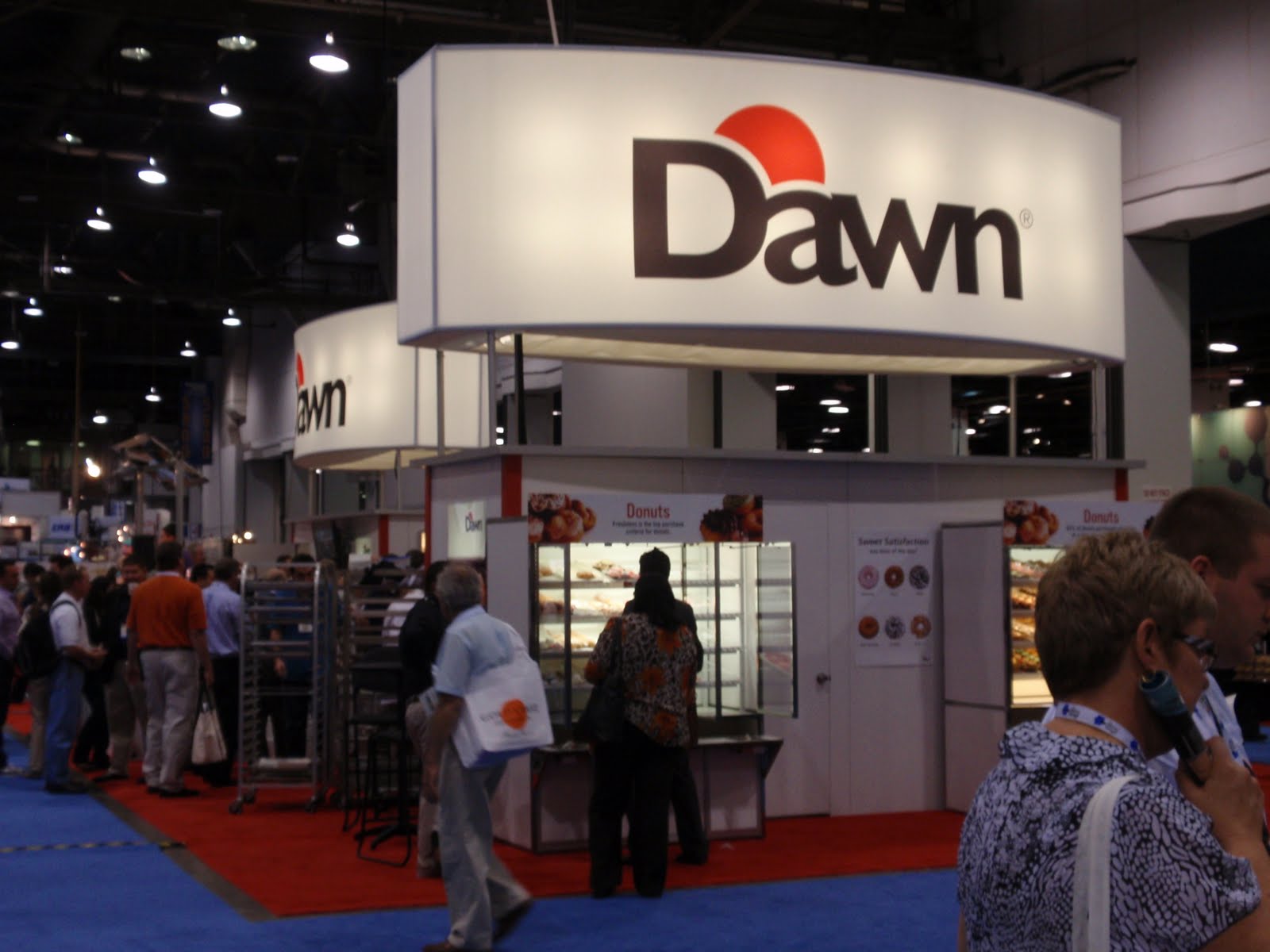
Dawn Food Products will close its three Modesto manufacturing plants in March, which will cost 265 workers their jobs.

Dawn officials say the closures are part of their corporate plan for "enhancing manufacturing operations and increasing efficiency."

The Michigan-based Dawn and its predecessor, Bunge Foods, have been making frozen cakes, cake mixes and other dry-mix bakery products in Modesto since 1996. Dawn leases 125,000 square feet in three buildings in the Beard Industrial District.
Again, the business reporter fails top ask the corporate flacks the question of how closing factories "enhances manufacturing operations" or "increases efficiency." An idled plant is a subtraction to the bottom line and there is no efficiency to be had. But these particular flacks didn't stop there:
"Dawn will work with our Modesto team members in the coming weeks to provide useful information, tools and resources that will help people move forward," said Michelle Fehr, Dawn's senior vice president of operations for U.S. bakery products. "We remain extremely grateful for the hard work and commitment of all our people during this challenging transition."
Since the business reporter won't do their job, allow me: Bullshit, bullshit, bullshit and more bullshit.

At least the story does attempt to draw somewhat of a bigger picture:
Losing those manufacturing jobs is another blow to Stanislaus County's already weak economy.

Stanislaus' unemployment rate tops 16 percent, and another big food processor, the Patterson Vegetable Co., announced that it planned to go out of business next month. The Patterson closure will eliminate 489 jobs.
Sounds like yet another community that's been pretty hard hit as the slow downward grind of the economy continues.

Friday, January 13, 2012

Riding the School Bus May Be About to Become a Thing of the Past, Part 2


Back on August 11th of last year, I wrote a post called "Riding the School Bus is Apparently About to Become a Thing of the Past," which included a story about a school district in Arizona that was discontinuing bus service for its students. Now the same problem is being faced by schools across California as the state is ending busing subsidies for local school districts. Here is California Watch with the details:
There are no sidewalks, bike lanes or public transportation in Forks of Salmon, a tiny, forest-shrouded community deep in the mountains of Siskiyou County. For seven of the 10 students at Forks of Salmon Elementary School, getting to class means taking a 45-minute school bus ride on 18 miles of a narrow, two-lane road that twists and turns with the Salmon River.

Until this month, most of the $32,000 the school spends each year to bus students was covered by the state. But now, Forks of Salmon and other rural school districts are grappling with how to keep their buses running. Last week, Gov. Jerry Brown proposed eliminating school transportation funding [PDF] next year, just weeks after announcing trigger cuts that wiped out $248 million for buses this year.

California does not require school districts to provide home-to-school transportation, except for certain special education students and those who are severely disabled or orthopedically impaired; less than 16 percent of students statewide ride school buses. But ridership is significantly higher in many rural areas, where sparsely populated, sprawling communities necessitate bus service, officials say.

"If we don't have transportation, we don't have school," said Tina Bennett, Forks of Salmon's superintendent, who also serves as its principal, first-through-third-grade teacher and bus driver.

The nearest gas station to Forks of Salmon charges $4.95 a gallon, and the roads, prone to rockslides and slick with ice in the winter, often are dangerous to drive. Not all families can afford or feel comfortable driving under those conditions, Bennett said.
Well, it sounds to me like those families are going to need to reconsider their options. But that isn't how some folks see it:
"It just doesn't seem equitable," said Stephanie Siddens, superintendent and principal of Bonny Doon Elementary School in Santa Cruz County, which used to receive about 72 percent of its transportation funds from the state. "Just because we provide transportation and we need it, we get cut more."
Sorry to be the one to break this to you, Ms. Siddens, but the state of California is broke and cuts have to be made SOMEWHERE. That's a fact, and there is no use crying about it.

In fact, I'll go you one further. If you are residing in a rural community you are going to have to accept the fact that it is time to start becoming self-sufficient and not count on expensive government services to be there for you anymore. In this instance, that probably means home schooling your children if you can no longer afford to drive them to school yourself. If you aren't prepared to do that, perhaps you should reconsider living in a locale where services are likely to break down sooner rather than later. On top of losing your school buses, you're probably going to be losing your rural post offices fairly soon as well.

Are you ready for that? Because if not, I'd consider moving. If there is ANYBODY who needs recognize that the time is quickly coming when they are going to need to be able to survive in the peak oil era with reduced or no government services supporting them, it is those who live the farthest from where those services are being provided.


Bonus: Dreams of Californication

Sunday, January 1, 2012

Hollywood Blues: 2011 Was the Worst Year at the Box Office Since 1995


In yet another sign that consumers have less money to spend, there was a steep drop in tickets sales for movies this past year, as reported by the Atlantic Wire:
The numbers are in, and they show what studio execs likely feared and movie-goers likely suspected all along: Not a lot of people went to the movies this year. Box-office tracker Hollywood.com says that "an estimated 1.275 billion tickets sold" in 2011, a 4.8 percent decrease from 2010 making for "the smallest movie audience since 1995," reports the AP. A hodgepodge of reasons for the sour showing were cited in the AP and ABC News reports. Among them: Too many sequels, too many kids movies, too many distracting gadgets, the bad economy, high ticket prices, and, something being called an "'Avatar' hangover" from 2010.
Conspicuously absent from the list was the fact that most of the movies released in 2011 sucked balls.


Bonus: Cue, Billy Joel

Thursday, December 8, 2011

Third World America: Copper Thieves Running Rampant in Vallejo, California

image: Vallejo, California, where the greatest opportunity these days is the ability to steal all the copper wiring in sight

If you read any detailed accounts of the history of the countries in sub-Saharan Africa, some common themes emerge. Most were granted independence by the colonial powers in the 1950s and 1960s, and with a few notable exceptions like Botswana have been political baskets cases since then. Putting aside for a moment the evils of imperialism, one thing the European powers did bestow on most of their colonies before giving them up was at least the basics of a modern industrial infrastructure--roads, railroads, electrical power, sewage systems and whatnot. Granted they only did this to make it easier to exploit their colonies' resources, but that doesn't change the fact that they did do it.

I don't point that out to defend imperialism in any way. Rather, what interests me is what became of that modern infrastructure after independence. In many of those countries, as they suffered from one brutish regime after another, it all fell apart. Roads became potholed and sometimes impassible, railroads were dismantled, water and sewer systems became unreliable and electricity intermittent. This is what happens to a society when a greedy and rapacious elite are allowed to steal all of the wealth while the citizens increasingly battle just to survive.

All of that is a long winded introduction to this article that appeared Tuesday in a California newspaper:
Blinking red lights in place of the usual traffic lights? Darkened street lighting on out-of-the-way cul-de-sacs?

Blame it on the copper thieves.

Vallejo city officials have begun to do exactly that.

For the past month, city workers have churned out their own street signs, telling the public where to point the finger when city lighting goes awry.

"Signal lights are non functioning due to copper wire theft," a sign at the temporarily blinking red signals at Wilson and Daniels avenues reads. The sign has been there for several months, since copper thieves cut out the wires under the set of lights there.

Assistant Maintenance Superintendent Mike Schreiner said a "national epidemic" of stealing and selling copper wiring for profit has spiked in Vallejo in the past several months, pushing the city workforce to its limits to keep up with repairs.

Asked how long it will take to fix the lights at the Wilson-Daniels intersection, Schreiner said, "We try to put (the signs) in intersections we know it's going to be a while until we get there. We do prioritize. Daniels and Wilson is not one of our busiest intersections by any means. I know people hate to hear that -- they all are taxpaying citizens with the streetlights, but if (an outage is) near a school and it's Daylight Savings time, you can understand who would get the priority."

There were some 30 light repairs pending just last week, Vallejo Public Works Director David Kleinschmidt said.
Of course, making those repairs costs a lot of money:
Some 77 city lighting fixtures have had their copper wiring stolen since May, and the city has wracked up about a $220,000 bill to replace stolen copper city-wide since January, Schreiner estimated.

For the first time, the Public Works Department will need to approach the Vallejo City Council mid-budget year, seeking to supplement its supply-purchasing account because of all the replacement copper needed, Kleinschmidt said.
The nationwide epidemic of copper theft is perhaps one of the leading indicators of just how desperate people are becoming. It must be some pretty hard and dirty work ripping out a bunch of copper wiring in order to sell it to a scrap dealer for maybe a few hundred bucks. Every once in awhile, of course, someone tries to steal a live wire and gets electrocuted. THAT'S some real desperation.

What it all adds up to is yet another way in which our national infrastructure is slowly deteriorating. Right now, the state and local governments are repairing the damage when the thefts occur. But the day is approaching when they will no longer be able to afford to keep making the repairs. And that will be the day that America begins to physically resemble a third world country...not just in the already-blighted rust belt areas, but everywhere.


Bonus: here is a harrowing little tune about desperation

Wednesday, November 30, 2011

The Rose Bowl Parade is Starting to Wilt


While the chicanery continues in the financial markets, propping up the stock market in an effort to convince the easily misled that all is well with the economy, stories continue to appear demonstrating that on Main Street the economic crash remains ongoing. The latest casualty, as reported by the New York Times on Monday, is the Rose Bowl Parade:
...the sputtering economy and municipal budget cuts are presenting new problems for the Tournament of Roses.

Several cities have had to abandon plans to put up floats for the parade, after doing so for decades. One company that had built floats for 25 years announced that it was going out of business, after its most reliable customers dropped out of the parade. And Occupy protesters threaten to show up 40,000 strong along the parade route to blanket the area with their message that “not everything is coming up roses.”

As if anyone needed reminding.

Nearly every city in Southern California — and in hard-pressed regions across the country — is struggling with deep budget cuts, trimming back park services and reducing the city staff. In the last few years, five cities have dropped out of the parade and several more considered doing so, only to be rescued by private money. Other cities have drastically scaled back their floats to save money. And few of those who left expect to re-enter the parade anytime soon.

The City of Long Beach, which faced a $43 million gap in its $400 million budget, had put a float in the parade every year for nearly nine decades. But with cutbacks all over the city, including in its tourism department, the decision to drop out was hardly difficult, Mayor Bob Foster said.

“It just doesn’t rank high on a priority list during times like this,” Mr. Foster said. “I don’t relish the decision, but I don’t think people are going to argue that we should keep a float when we are cutting libraries.”
I must say that is a rare bit of common sense being shown there by City of Long Beach Mayor Bob Foster. No sir, it certainly does not make sense to spend money on such a frivolity at the expense of vital city services. Note the key factoid Mayor Foster's quote: the city has had a Rose Bowl float for NINE DECADES, meaning that even during the depths of the Great Depression it was able to afford to do what it now can no longer afford to do. That seems pretty significant to me.

Even more significant, the cutback in Rose Parade floats extends beyond just municipal governments to corporate America:
Even some of the most longstanding companies that sponsored floats have bowed out. For the first time in anyone’s memory, there will be no team of Clydesdales representing Budweiser and St. Louis. The company, now a subsidiary of a multinational corporation, decided to drop out of the parade to focus on sponsorships that “reach a higher concentration of beer drinkers” and “more directly discuss the Budweiser brand.”
Love that bit of weaselly corporate FlackSpeak Budweiser is using to try to excuse the fact that their pisswater beer won't be represented in the parade this year. As a serious beer drinker myself, I'll save you assholes the trouble and "discuss the Budweiser brand" for you--it's shit. Frankly, I wouldn't even pour it into the troughs used to water the Clydesdales because that would constitute an act of animal cruelty.

Moving on, it's also nice to see that the Occupy Movement is getting involved in protesting the Rose Parade:
Occupy protesters say they plan to bring 40,000 people to the parade and form their own “human float” at the end of the route.

“We’re in a crisis situation, and we can’t pretend that everything is as hunky-dory as people in power want us to believe, when there are tens of thousands of people unemployed here,” said Peter Thottam, the lead organizer for the Rose Parade protest. “The parade has been a cultural embodiment of corporatization and militarization of our society. There are thousands of people there, and millions of people watching it on television, and we want to bring our message to them.”
Damn straight, Mr. Thottam. Although I must say that it appears as that within a few years it will be the peak oil-induced economic crash rather than your protests that spell the overdue end of this whole silly spectacle.

Wednesday, November 23, 2011

Maybe Sponsoring an NBA Arena is NOT a Smart Business Decision


I didn't get my wish from earlier this year that the NFL season would be cancelled by the dispute between the billionaire owners and the millionaire players. But I still have hope for the NBA, which seems to be firmly determined to commit collective suicide over its selfish inability to divide up the billions of dollars it normally vacuums from the pockets of its idiotic fans every year. With that as a backdrop, I found this recent story to be of interest:
Power Balance has filed for bankruptcy protection, and officials with the Sacramento Kings -- the team that plays at the company's namesake arena -- have responded.

"We maintain close communications with Power Balance and are aware of their decision to file for voluntary protection available to them through the courts," the organization said in an electronic statement.
Guess I'm not a hip dude, because before reading this I had no idea what Power Balance was or what the company produced. Fortunately, the article enlightened me:
Power Balance is a wristband company based in Southern California.
Damn...seems like you'd have to sell an awful lot of wristbands to be able to afford the many millions it takes to get your company name plastered on a stadium. So how'd they get in financial trouble, anyway?
TMZ reports Power Balance filed last week, and just settled a $57 million lawsuit from someone claiming a product is misleading.
So how the hell can a wristband be "misleading," especially to the tune of $57 freaking million? Are those solid gold and platinum wristbands they are selling?

Anyway, the article ends on a positive note:
So far, there's still no NBA season for 2011-12.
I'll drink to that.

Apology Not Accepted


I’m sorry, Madame, but this (from Talking Points Memo) just isn’t going to cut it:
University of California-Davis Chancellor Linda Katehi on Monday apologized to students for last week’s pepper-spraying incident, where a campus police officer at point-blank range sprayed down a group of sitting protesters.

“I feel horrible for what happened on Friday, Katehi told a rally of students. “If you think you don’t want to be students in a university like we had Friday, I’m just telling you, I don’t want to be the chancellor of the university we had on Friday.”
Well, since you WERE the chancellor of the university on Friday, you really should do the honorable thing and GTFO. But sadly, no:
Katehi has been under growing pressure to resign, but so far she’s staying put. “The university needs me,” she told ABC’s Good Morning America Monday morning. In an interview with NPR affiliate KQED, Katehi said the university police were not supposed to use force. She said, “as a human being,” she was “horrified” by the pepper-spraying images. And in front of students later on Monday, the chancellor admitted she must work to earn back the students’ trust.

“I know you may not believe anything that I’m telling you today, and you don’t have to,” Katehi said. “It is my responsibility to earn your trust.”

The crowd chanted “Shame on you” and “resign” at Katehi after she finished her remarks, AggieTV reported.
Let me put this as bluntly as I can, Ms. Katehi, so that even a dimwitted academic such as yourself can understand it: apology not accepted. You are the “leader” of a university that employs brutish thugs who have no inhibition against pepper-spraying students for engaging in non-violent protest. The same students, incidentally, who pay thousands of dollars a year for the “privilege” of attending your morally decrepit institution—many of whom have no doubt put themselves in hock with massive amounts of student loans in order to pay your salary, among other frivolous expenses.

Being in charge isn’t all about getting the big office, all the perks and the high salary. You’re also the one who gets to take the fall when things go wrong. When your employees fuck up so massively and deliberately, YOU should be the FIRST one to go. That’s called accountability, something which we have far too little of in this country these days.

In fairness, you’re obviously not the only one. The entire management team of every Wall Street firm that was complicit in crashing the economy back in 2008 should have been similarly removed from their positions and then vigorously prosecuted for their actions. The entire defense and foreign policy team of the Bush administration that was complicit in launching the Iraq War and engaging in torture and rendition should be on the dock at the International Criminal Court in The Hague. The current occupant of the White House, who utterly failed to prosecute the criminals on Wall Street and in the Bush administration and in fact has committed his own set of heinous war crimes in Afghanistan and with his drone missile campaign, should also at a minimum do the honorable thing and resign.

Does all of that seem far too extreme? If so, it is only because you have become inured to the idea that accountability is only something that happens to little people and not the movers and shakers of our society. When President Hopey-Changey said almost immediately upon inauguration that we need to “look forward,” he was signaling that he was not going to hold those responsible for wrecking the economy and lying us into war accountable for their actions. Upon hearing those words, any right-thinking person should have immediately begun demanding Obama’s impeachment for dereliction of duty.

Much as rhetorical con men like Obama like to try to complicate these issues, it really is very simple. Either you innately recognize that giving $700 billion in taxpayer bailouts to financial criminals; or launching a war against a country that did not attack our own and posed no military threat to us; or operating an unaccountable concentration camp on foreign soil; or torturing defenseless prisoners; or wantonly assassinating American citizens without trial; or bombing innocent villagers with drone missiles; or not reporting to law enforcement a sexual predator preying on children in your midst; or tear-gassing, billy-clubbing and pepper spraying non-violent protesters seeking economic justice is morally wrong, or you do not. And if you do not, you are the enemy and should be considered as such regardless of position, education level, social standing or political affiliation.

Your apology is not accepted, Ms. Katehi. And I suspect that this is only the beginning.